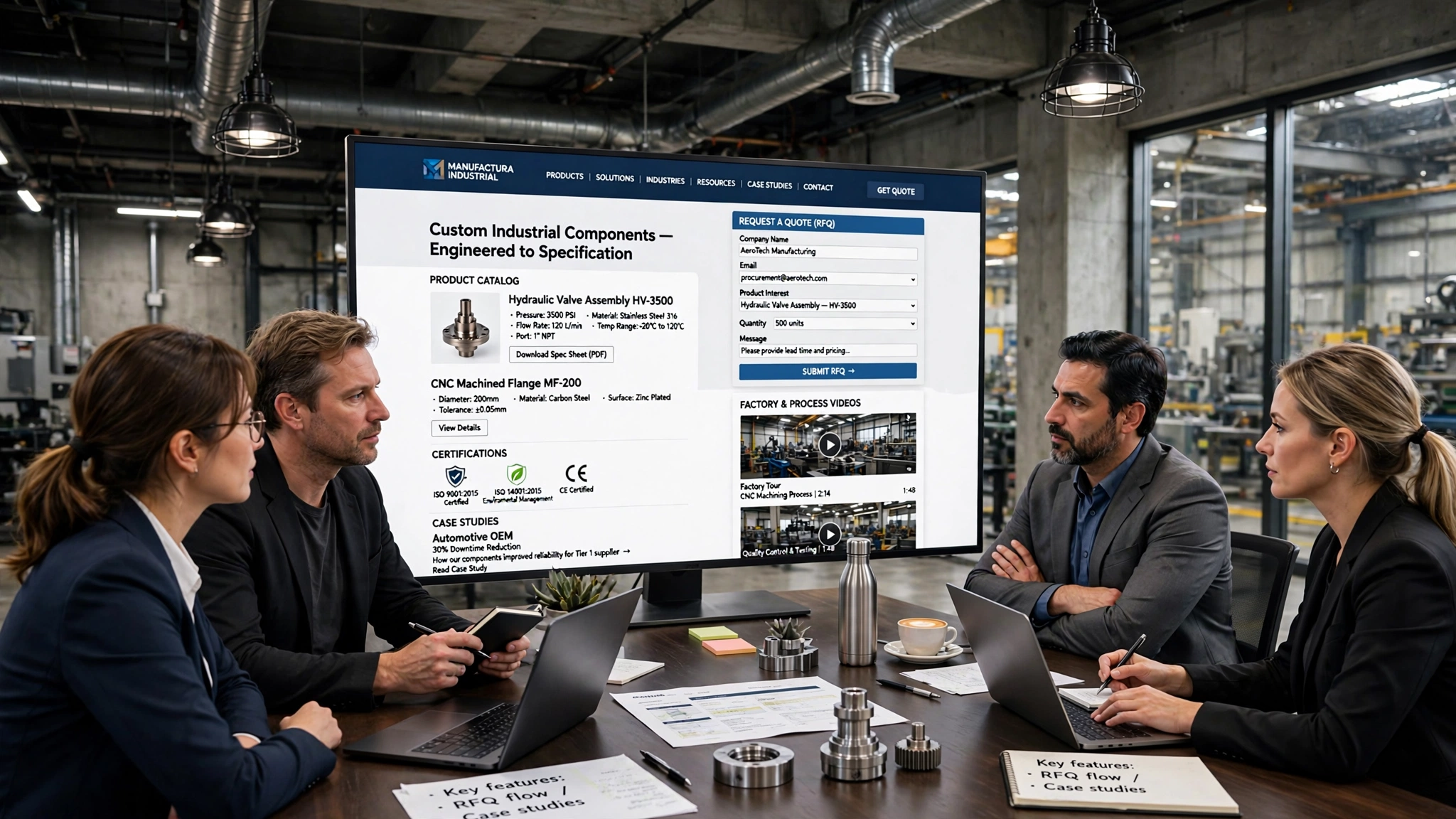
Manufacturing Company Website Design Strategies: Generate B2B Leads in Minneapolis
For manufacturers in Minneapolis, your website is your 24/7 sales engineer. Procurement managers, OEM buyers, and engineers from across the Midwest are vetting suppliers online before they ever request a quote. A strategic manufacturing website doesn’t just showcase capabilities — it builds credibility, shortens sales cycles, and generates qualified B2B leads.
Here’s how manufacturers use website design to win RFQs and long-term contracts.
1. Design for Engineers and Procurement, Not Just Marketing
Your buyer is technical. They’re scanning for specs, certifications, and capacity — not fluff.
Capabilities Above the Fold: In 3 seconds, state what you make, processes you run, materials you work with, and industries served. Example: “Precision CNC Machining + Sheet Metal Fabrication | Aerospace, Medical, Industrial | ISO 9001:2015 | Minneapolis, MN.”
No Stock Photos of Handshakes: Use real photos of your Minneapolis facility, machines in action, quality lab, and finished parts. Add captions with tolerances: “±.001″ tolerance on 5-axis mill.”
Fast Load, No Gimmicks: Many corporate firewalls block heavy video. Optimize images, skip auto-play sliders, and keep load time under 2 seconds. Engineers leave slow sites.
2. Build a Spec-First Information Architecture
B2B buyers are on a mission. Make it easy to self-qualify and request a quote.
Dedicated Capabilities Pages: Create separate pages for CNC Machining, Laser Cutting, Injection Molding, Assembly, etc. Include materials list, size/tolerance ranges, lead times, and min/max quantities. This ranks for “CNC machining Minneapolis” and answers RFQ questions upfront.
Industries Served Pages: Show you understand sector-specific needs: Medical Device, Aerospace, Defense, Food Processing. Include compliance notes like ITAR, FDA, or USDA as applicable.
Downloadable Assets: Offer CAD files, material data sheets, and a 1-page capabilities PDF. Gated behind a short form, these turn anonymous visitors into leads. “Download Our Line Card” is gold for engineers.
RFQ Form with File Upload: Let buyers attach STEP files, prints, or BOMs directly. Ask for material, quantity, and timeline. Route it to sales/estimating, not info@.
3. Trust Signals That De-Risk Supplier Selection
Switching manufacturers is risky. Your site must prove quality, capacity, and stability.
Certifications Front and Center: ISO 9001, AS9100, ITAR, UL, FDA, IATF 16949 — display badges in the header and footer. Link to cert PDFs.
Quality + Equipment Lists: Detail your CMM, inspection process, and machine list with makes/models. “24 Mazak CNC machines” signals capacity to buyers.
Case Studies, Not Just Galleries: Go beyond part photos. Write 200-word studies: Challenge, Solution, Result. “Reduced lead time 40% for Medtronic assembly” beats “medical parts.”
Client Logos + NDAs: Show logos you’re allowed to display. For sensitive work, use “Fortune 500 Medical OEM” with a description. Add testimonials from engineers or supply chain managers.
4. Local + Technical SEO: Be Found During Supplier Searches
Buyers search “precision machining near me” and “contract manufacturer Minneapolis” when vetting options.
Location + Capability Pages: “CNC Machining Minneapolis,” “Metal Stamping Twin Cities,” “Contract Manufacturing Minnesota.” Add unique content about shipping, local pickup, and Midwest logistics advantages.
Technical Content Hub: Blog posts like “Design Guidelines for Sheet Metal Fabrication” or “How to Reduce Tolerance Stacking in Assemblies” rank for long-tail searches engineers actually make. It proves expertise and captures early-stage researchers.
Google Business Profile: Even for B2B. Use “Manufacturer” category, add facility photos, and post about new equipment or certifications.
Schema Markup: Use Organization, LocalBusiness, and Product schema for key capabilities so Google shows rich results.
5. Design for the Long B2B Sales Cycle
Manufacturing leads don’t close in one visit. Your site should nurture them.
Email Capture for Engineers: Offer “Design for Manufacturability Guide” or “Tolerance Chart PDF” in exchange for email. Drip useful content, not sales spam.
Clear Contact Paths: Separate “Request a Quote,” “Talk to an Engineer,” and “Careers.” Make direct dials and emails visible — buyers hate contact forms with no follow-up.
Video Facility Tour: A 2-minute walkthrough of your Minneapolis plant builds more trust than 10 pages of text. Host it natively for speed.
The Bottom Line for Minneapolis Manufacturers
A lead-generating manufacturing website acts like your best sales engineer: it speaks the buyer’s language, proves technical capability, and makes RFQs effortless. It turns anonymous “machining supplier” searches into qualified projects.
At Optimum Design Tech, we design manufacturing websites for Minneapolis companies that rank for technical searches, showcase complex capabilities clearly, and convert engineers into RFQs. Because in B2B, the best-built website wins the contract before the first call.
Need a website that engineers respect and procurement trusts? Contact Optimum Design Tech for a B2B-focused build.