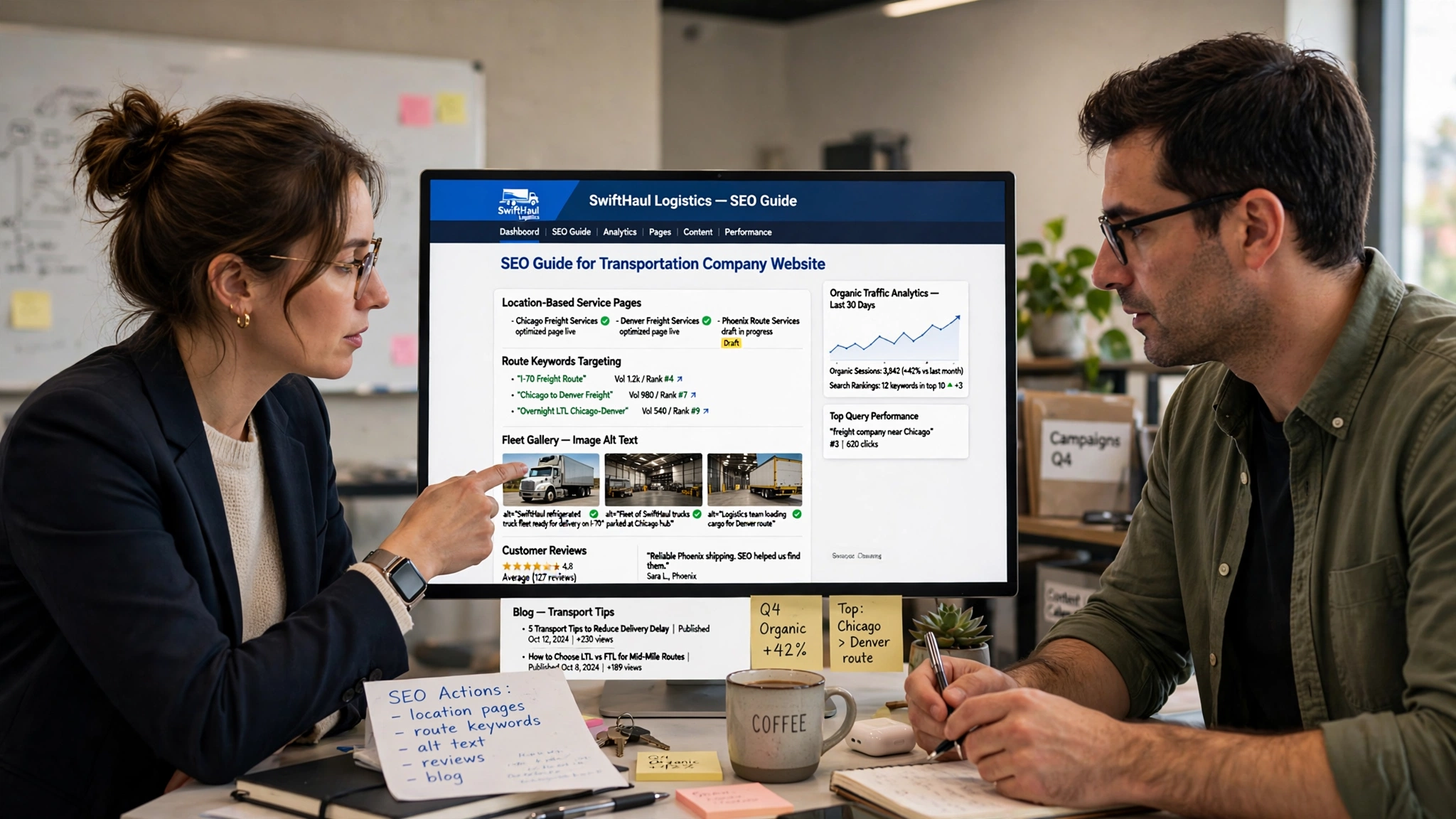
Transportation Company Website SEO Guide: Drive Leads in Minneapolis
For transportation companies in Minneapolis, SEO is your lane to consistent leads. Shippers, brokers, and corporate travel managers search “freight carrier Minneapolis,” “corporate transportation Twin Cities,” or “medical transport St. Paul” before they ever pick up the phone. If your website isn’t ranking, your trucks, buses, and drivers aren’t getting booked.
Here’s how transportation companies improve visibility and generate leads through SEO-focused web design.
1. Build a Site Structure That Matches How Shippers Search
Google rewards sites that mirror search intent. Transportation buyers are specific — your site structure should be too.
Service + Location Pages: Create dedicated pages for each core service + city: “Truckload Freight Minneapolis,” “LTL Shipping St. Paul,” “Medical Transportation Bloomington,” “Corporate Shuttle Twin Cities.” Each needs 600+ words, unique FAQs, and local references like I-94, I-35W, or MSP Airport.
Separate Commercial vs. Passenger: Don’t mix freight and passenger transport. Searchers for “charter bus Minneapolis” and “freight broker Twin Cities” are different audiences. Split navigation helps both rank and convert.
Equipment/Capabilities Pages: “53’ Dry Van,” “Reefer Trucks,” “Flatbed,” “Wheelchair Vans,” “Motorcoaches.” Add specs, capacity, and photos. These pages rank for “reefer trucking Minneapolis” and answer RFP questions upfront.
2. Optimize Google Business Profile + Local Pack
70% of “transportation company near me” clicks go to the Map Pack. Win it.
Primary Category Matters: Use “Trucking Company,” “Transportation Service,” “Bus Charter,” or “Medical Transportation Service.” Add secondary categories for all services you offer.
NAP Consistency: Name, Address, Phone must match across your website, GBP, FMCSA SAFER, and directories like DAT or Carrier411. Mismatches hurt rankings.
Post Weekly: Share photos of your Minneapolis fleet, new equipment, or lanes you’re running. “Daily runs from Minneapolis to Chicago” signals activity to Google and shippers.
Reviews With Keywords: Ask clients to mention service + location: “Reliable LTL carrier from Minneapolis to Milwaukee” or “On-time corporate shuttle for our St. Paul office.”
3. Technical SEO: Speed, Schema, and Mobile
Transportation buyers are often booking from warehouses or offices. Your site must perform.
Mobile-First Load Speed: Test on mobile in Minneapolis. Compress fleet photos and keep load time under 2 seconds. Slow sites drop in “near me” results.
Schema Markup: Add LocalBusiness, TransportationService, and Service schema. This helps Google show ratings, hours, and services directly in search.
Clean URL Structure: Use /truckload-freight-minneapolis not /services?id=7. Breadcrumbs help Google understand your site hierarchy.
Secure + Accessible: SSL is required. ADA compliance matters if you serve public or medical transport.
4. Content That Captures High-Intent Searches
Rank for the questions shippers and passengers ask before they book.
Lane + Industry Pages: “Minneapolis to Chicago Freight Rates,” “Reefer Trucking for Food & Beverage Minnesota,” “DOT Compliance for Minneapolis Carriers.” These rank for long-tail B2B searches.
FAQ Pages with Real Answers: “How much does LTL cost from Minneapolis to Denver?” “Do you provide liftgate service in St. Paul?” Each FAQ is a chance to rank and reduce sales calls.
Seasonal Content: “Avoiding Winter Freight Delays Out of Minneapolis” in November. “Spring Road Restrictions MN” in March. Shows local expertise and captures timely traffic.
Case Studies: “Cut 24 Hours Transit for Eau Claire Manufacturer Using Minneapolis Cross-Dock.” Add metrics. These rank and convert.
5. Conversion-Focused Design for SEO Traffic
Rankings are worthless without leads. Design each page to convert.
“Request a Quote” Forms with Load Details: Let shippers enter origin, destination, freight type, weight, and pickup date. Upload BOLs or lane lists. Route to sales, not info@.
Click-to-Call on Mobile: Sticky phone + “Get Freight Quote” buttons. Transportation buyers often call.
Trust Signals Near CTAs: Add MC/DOT number, “24/7 Dispatch,” “FMCSA Satisfactory Rating,” and “Insured $1M” next to forms.
Track & Trace Link: Even if it’s a client portal login, showing it signals tech sophistication and builds trust.
6. Earn Backlinks That Matter in Logistics
Google trusts sites that the industry trusts.
Industry Directories: FMCSA, SaferWatch, DAT Directory, MN Trucking Association member pages.
Local Links: Sponsor a Minneapolis Chamber event, partner with warehouses, or get listed on “preferred carrier” pages for manufacturers.
Partner Content: Guest posts on freight blogs or local business journals: “State of Freight in the Twin Cities 2026.”
The Bottom Line for Minneapolis Transportation Companies
SEO-focused web design turns your site into a 24/7 lead generator. It puts you in front of shippers searching “freight company Minneapolis” at 8 AM and corporate planners booking “airport shuttle St. Paul” at 9 PM.
At Optimum Design Tech, we design transportation websites for Minneapolis carriers that rank locally, load fast, and convert visitors into loads, contracts, and passengers. Because in this industry, visibility drives revenue.
Ready to put your fleet on page one? Contact Optimum Design Tech for an SEO audit and website built to book freight.