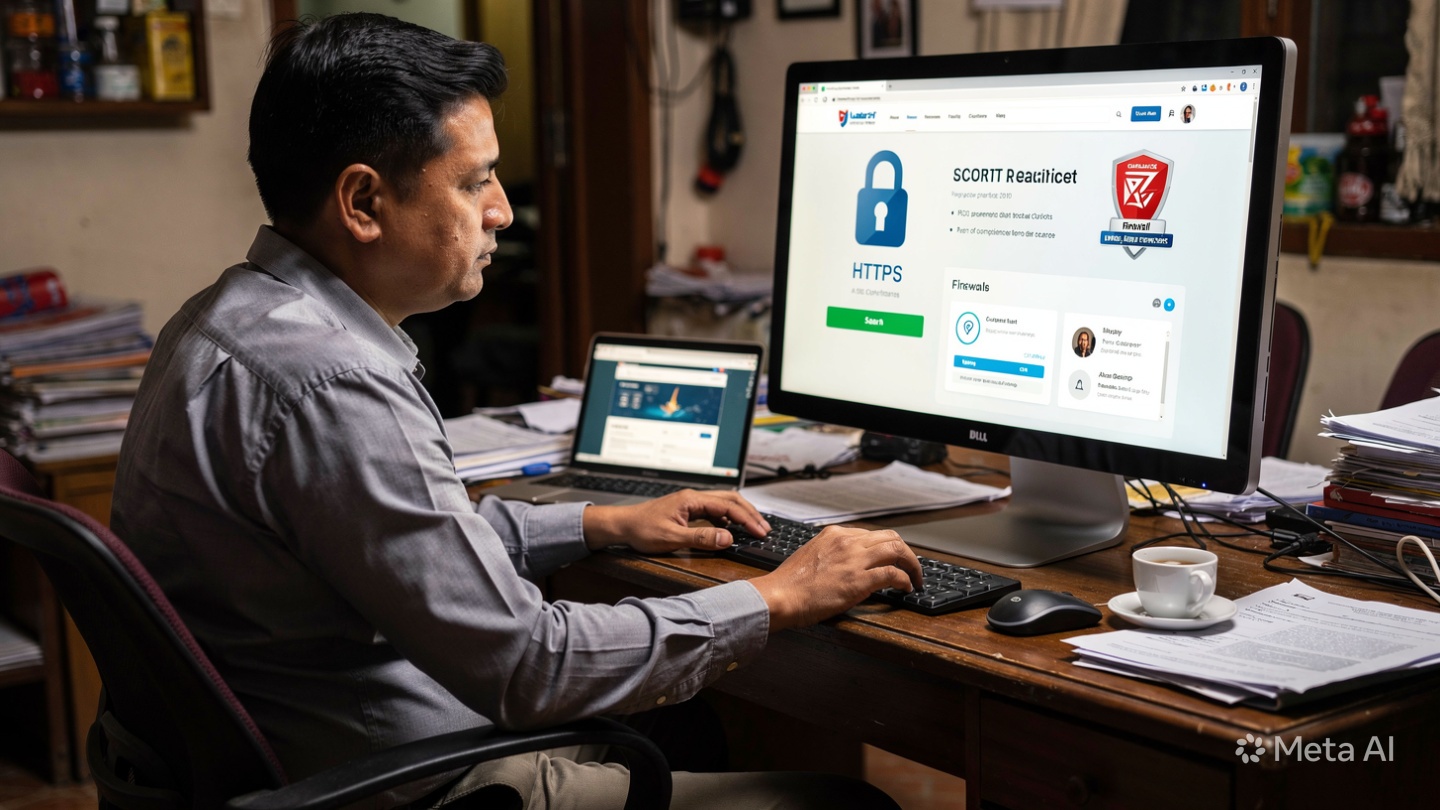
Why Businesses Need Secure Websites: Trust Is Earned With Every Click
Your website collects names, emails, payment info, and leads. If it gets hacked, you lose more than data — you lose customer trust, search rankings, and revenue. For Minneapolis businesses, website security isn’t an IT issue. It’s a business survival issue.
Cybersecurity Threats Continue to Increase, Making Website Security Essential
Small businesses are the #1 target for cyberattacks. Why? Hackers know you’re less likely to have enterprise-level defenses. Malware, phishing, DDoS attacks, and form spam hit thousands of sites daily. A single breach can take your site offline, inject malicious code, or steal customer data. Google will flag your domain with “This site may be hacked,” tanking traffic overnight. Recovery costs far more than prevention.
SSL Certificates, Secure Hosting, and Regular Updates Protect Sensitive Data
Security is layers, not one fix. The basics every Minneapolis site needs:
1. SSL Certificates: The Padlock Matters
SSL encrypts data between the user’s browser and your server. Without it, contact forms, logins, and payments are exposed. Google marks non-HTTPS sites as “Not Secure” and uses SSL as a ranking signal. If your site still says http://, you’re losing trust and SEO before the page loads.
2. Secure Hosting and Firewalls
Cheap shared hosting is a risk. One hacked site on the server can compromise yours. Managed WordPress hosting, web application firewalls, and malware scanning block attacks before they reach your site. Your host should provide daily backups so you can restore quickly if something breaks.
3. Regular Updates and Patching
WordPress, plugins, and themes release security patches constantly. Outdated software is the #1 way sites get hacked. Automate updates or schedule monthly maintenance. Delete unused plugins — they’re hidden backdoors. Strong passwords and two-factor authentication on admin accounts stop brute-force attacks.
4. Spam and Form Protection
Contact forms are a magnet for bots. CAPTCHA, honeypots, and spam filters stop junk submissions and protect your server resources. They also prevent attackers from using your site to send phishing emails.
5. Backups and Monitoring
If the worst happens, backups are your safety net. Daily off-site backups mean you can roll back in minutes, not weeks. Uptime monitoring alerts you the second your site goes down so you can act fast.
For Minneapolis Businesses, Secure Websites Build Trust and Prevent Costly Issues
Customers check for the padlock before entering credit card info. B2B buyers vet your security before signing contracts. One data breach costs small businesses $120K–$1.24M on average in downtime, legal fees, and lost customers. An SSL certificate costs under $100/year. The math is simple.
Security also protects SEO. Hacked sites get de-indexed. Malware redirects kill rankings. Google won’t send users to unsafe sites, period.
Security Is Part of User Experience
A safe site loads fast, stays online, and keeps data private. That builds confidence. When users trust your site, they convert.
At Optimum Design Technologies, we build Minneapolis websites with security baked in from day one: SSL, hardened hosting, updates, and monitoring. Because the most expensive breach is the one you could have prevented.