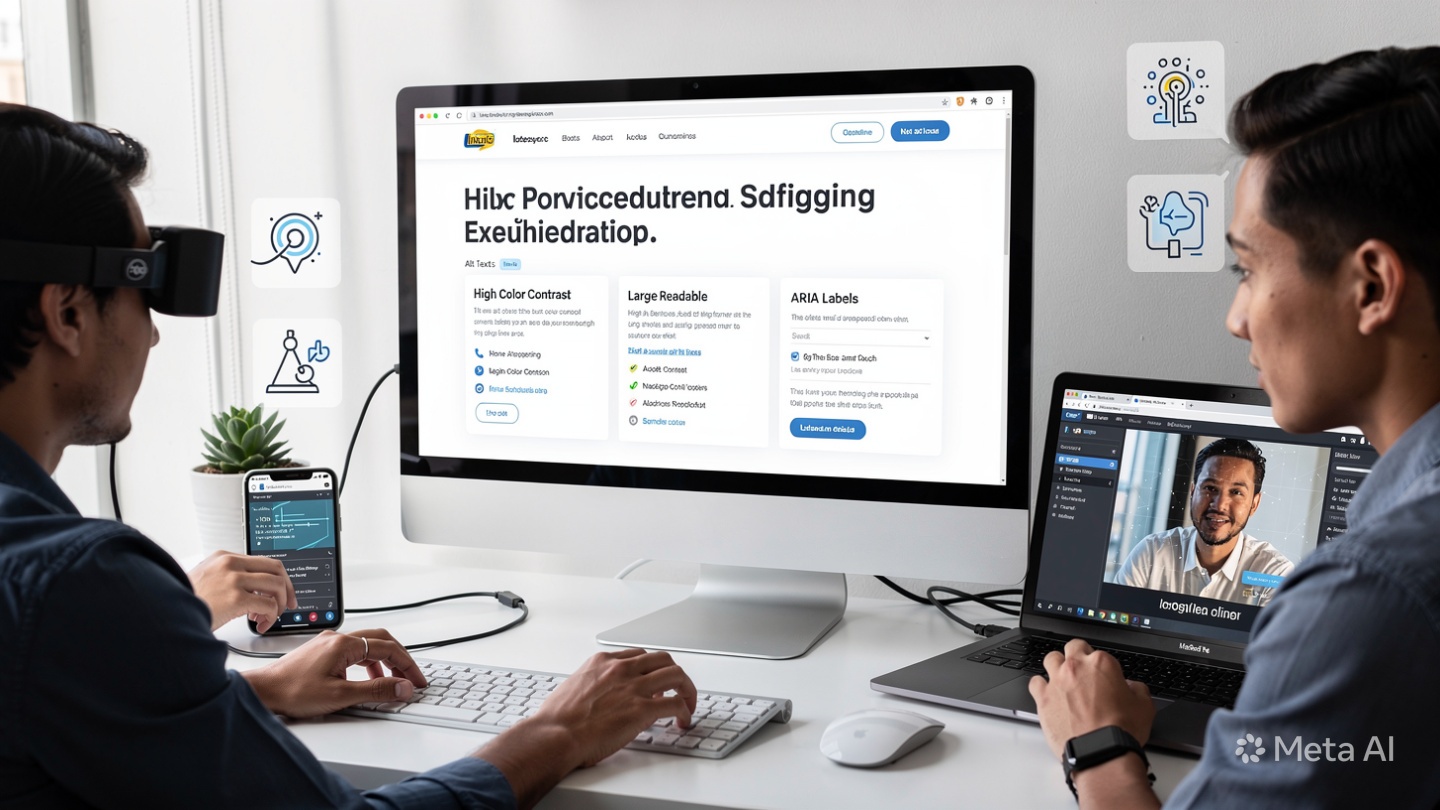
Accessible websites ensure all users can navigate and interact effectively, regardless of ability, device, or situation. In modern web design, accessibility is not just compliance. It is a core part of great user experience.
1. Accessibility Expands Your Audience
Over 1 billion people worldwide live with a disability. That includes vision, hearing, motor, and cognitive impairments. Without accessibility features, you exclude potential customers. Alt text, keyboard navigation, captions, and screen reader compatibility make your content available to everyone. For Minneapolis businesses, inclusivity means more leads, more sales, and stronger community reputation.
2. Accessibility Features Improve Usability for Everyone
Designing for accessibility benefits all users, not just those with disabilities. Clear color contrast helps people in bright sunlight. Captions help users in noisy environments. Keyboard shortcuts help power users navigate faster. Descriptive link text, logical headings, and simple forms reduce cognitive load for everyone. Good accessibility is just good UX.
3. Accessible Sites Perform Better on SEO
Google prioritizes user experience. Many accessibility best practices overlap with SEO. Proper heading structure, alt text for images, descriptive anchor text, and mobile-friendly design all improve crawlability and rankings. A site that is easy for assistive technology to understand is also easy for search engines to index. Accessibility supports long-term organic growth.
4. Inclusive Design Reduces Legal Risk and Builds Trust
ADA and WCAG compliance are increasingly important. Lawsuits related to inaccessible websites have risen year over year. Beyond compliance, accessibility shows customers you value every visitor. Trust signals like readability, clear navigation, and inclusive design build brand credibility and loyalty in competitive Minneapolis markets.
5. Key Accessibility Elements That Boost UX
Keyboard Navigation: All functions should work without a mouse.
Alt Text: Describe images for screen readers and improve SEO.
Color Contrast: Ensure text is readable for low-vision users.
Readable Fonts: Use 16px minimum and clear typefaces.
Captions and Transcripts: Make video and audio content accessible.
Logical Structure: Use proper HTML headings and ARIA labels.
6. Accessibility Drives Engagement and Conversions
When users can easily read, navigate, and interact with your site, they stay longer and convert more. Frustration drops, bounce rates fall, and form completions rise. Accessible design removes barriers between your business and your audience.
At Optimum Design Technologies, we design inclusive websites for Minneapolis that improve engagement and reach. From WCAG audits to UX testing, we build sites that work for everyone. Call Today for Free Consultation! 260-220-9000