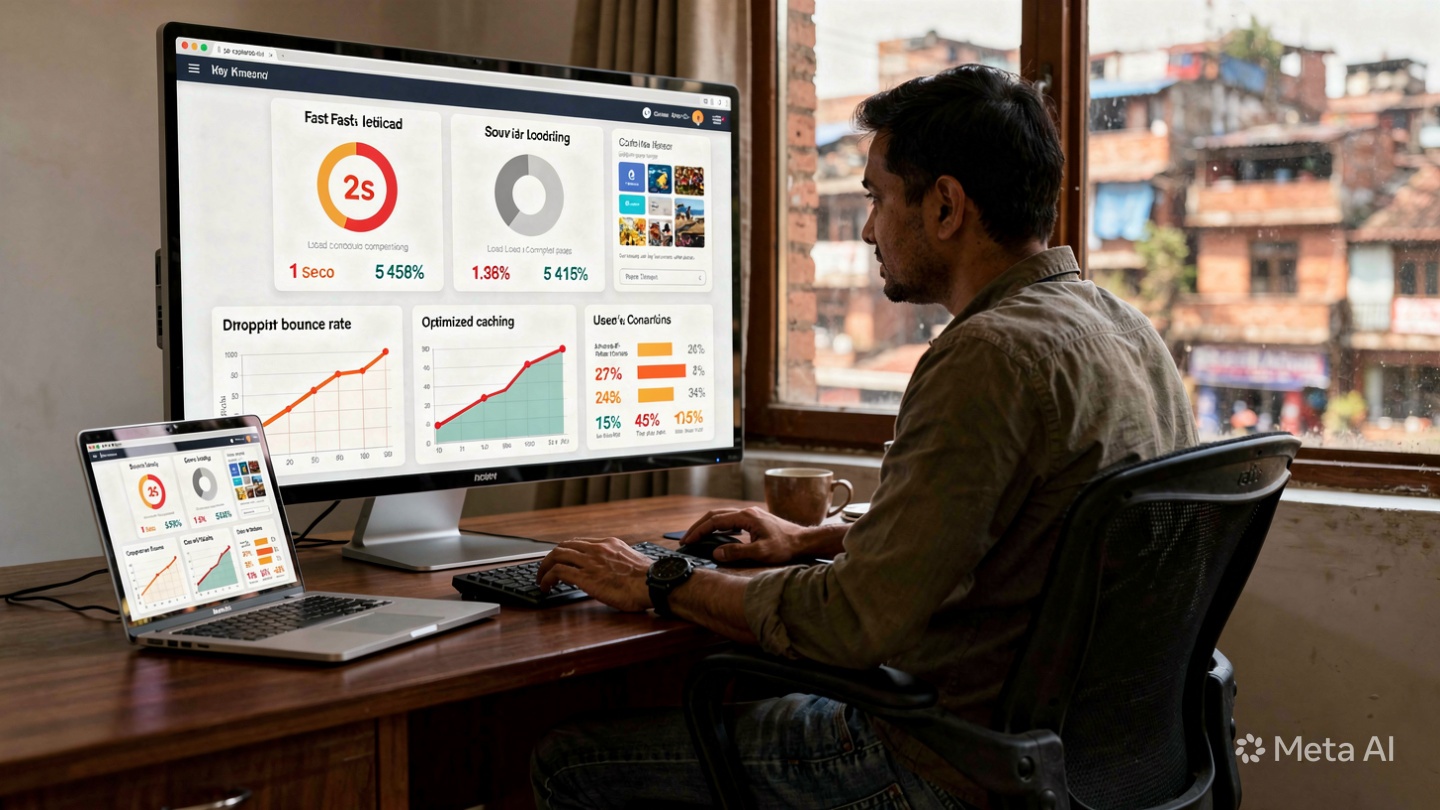
Why Website Speed Is Critical for User Retention: Every Second Costs You Customers
Patience online is dead. If your site takes more than 3 seconds to load, 53% of mobile users leave. They don’t wait, refresh, or give you a second chance — they hit back and choose your competitor. For Minneapolis businesses, website speed isn’t a technical detail. It’s the difference between keeping a visitor and losing a sale.
Users Expect Websites to Load Quickly
Modern users compare your site speed to Amazon, Google, and Netflix. Instant is the expectation. When your homepage lags, it feels broken. Slow sites create anxiety: “Is this secure? Is this company still in business?” Speed is a trust signal. A fast site feels professional, reliable, and competent. A slow site feels outdated and risky before anyone reads your content.
Slow Performance Leads to Frustration and Abandonment
The data is brutal:
1. Bounce Rates Skyrocket
As page load time goes from 1s to 3s, bounce rate increases 32%. At 5s, it jumps 90%. Users don’t browse slow sites — they abandon them. That’s traffic you paid for through ads or SEO, gone in seconds.
2. Conversions Collapse
A 1-second delay reduces conversions by 7%. For an e-commerce site making $100K/month, that’s $84,000 lost per year to slowness. For service businesses, it means fewer form fills and phone calls. Speed directly impacts revenue.
3. SEO Rankings Drop
Google’s Core Web Vitals make speed a ranking factor. Slow sites get pushed down in search results, especially on mobile. Poor performance tells Google your page provides a bad experience, so it sends users elsewhere. You lose traffic and rankings.
4. Mobile Users Suffer Most
Mobile networks are slower and less stable. A site that’s “fine” on desktop can be unusable on 4G in Minneapolis. Since 60%+ of local searches are mobile, slowness kills your most valuable traffic.
Optimized Websites Reduce Bounce Rates and Improve Customer Satisfaction
Speed optimization isn’t magic — it’s engineering. What moves the needle:
1. Image Optimization: Compress and serve next-gen formats like WebP. Oversized images are the #1 speed killer.
2. Caching and CDNs: Store site files closer to users so pages load instantly for repeat visitors.
3. Code Minification: Remove bloat from CSS, JavaScript, and HTML. Less code = faster rendering.
4. Quality Hosting: Cheap shared hosting throttles performance. Managed hosting with server-level caching is faster.
5. Lazy Loading: Load images/videos only when users scroll to them, not all at once.
6. Plugin Audits: Each plugin adds load time. Delete unused ones and replace heavy plugins with lightweight code.
At Optimum Design Technologies, We Prioritize Performance Optimization for Better Results
We test every Minneapolis site against Core Web Vitals before launch. Our builds hit sub-2-second load times because we know speed keeps users, improves SEO, and drives conversions. Fast sites feel better to use — and they make more money.
Your visitors won’t tell you your site is slow. They’ll just leave. Don’t let load time be the reason you lose business.